Mon–Fri: 09:00–18:00
+380 (97) 204-00-11Write to us, we're online
Language

Request a call
Write to us, we're online


Language
Mon–Fri: 09:00–18:00
+380 (97) 204-00-11Request a call
 18
March 2026
18
March 2026
 4057
4057
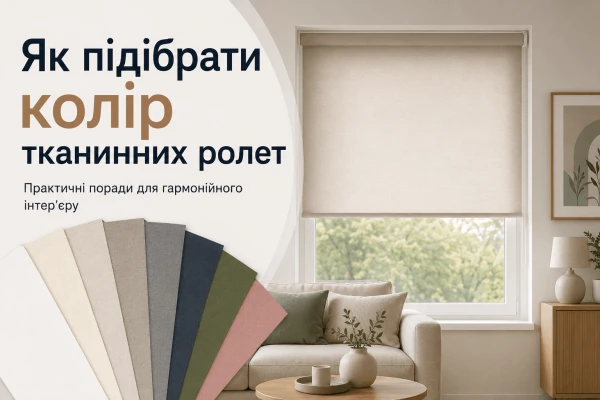
The color of roller blinds affects not only the window's appearance but also the overall feel of the interior. Light shades add space, dark tones provide depth and privacy, while bright colors can serve as stylish accents.
The right shade helps make a room visually brighter, calmer, or more expressive. That's why roller blinds should be chosen not only based on price or system type but also considering the color of walls, furniture, floors, and lighting.
Browse our catalog: roller blinds for windows

Light and neutral fabrics work best: white, milk, light grey, or beige. They don't overwhelm the space and pair perfectly with modern kitchen cabinets.
Choose calm shades for rest areas: grey, sand, taupe, graphite, or beige. If complete darkness is needed, consider blackout fabrics.
Universal grey, cream, or graphite blinds look stunning in living areas. They highlight the interior style and remain timeless for years.
Blackout fabrics provide high light blockage regardless of their color. This means even a light or white fabric can reliably protect against sunlight and streetlights.
If you have white window frames and light walls, grey roller blinds often provide the most "expensive" visual effect. If you want a maximum light and airy feel—choose milky or light beige fabrics.
Grey, beige, and milky shades are considered the most practical because dust is less visible on them, and they easily blend with most interiors.
Light roller blinds are generally better for small spaces — they visually expand the room and don't overwhelm the window area.
No. Light blackout fabrics can block light just as effectively. What matters is the structure and layering of the fabric, not just the dye color.
Interested in our products and need a consultation?
Leave a request and our manager will consult you
Choose your preferred contact method