Mon–Fri: 09:00–18:00
+380 (97) 204-00-11Write to us, we're online
Language

Request a call
Write to us, we're online


Language
Mon–Fri: 09:00–18:00
+380 (97) 204-00-11Request a call
 13
July 2026
13
July 2026
 8018
8018
The reliability of a security roller shutter depends not only on the lock or electric motor. The main structural element is the profile from which the shutter curtain is assembled. Below, we explain the difference between foam-filled and extruded profiles and which option is suitable for windows, doors, retail premises, gazebos and garage openings.
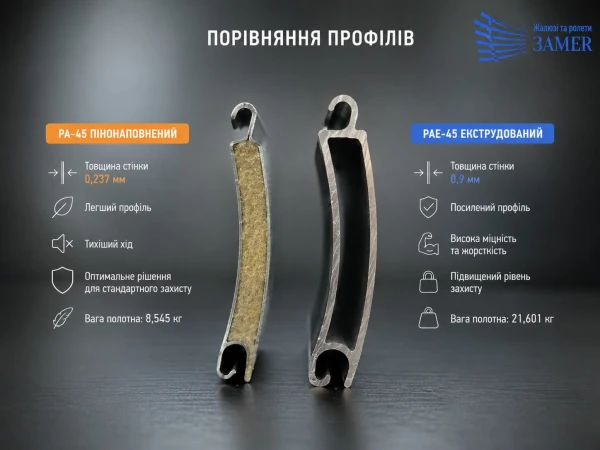
.jpg "Comparison of PA-45 and PAE-45 roller shutter profiles")
The foam-filled PA-45 and the reinforced extruded PAE-45 differ in design, weight, rigidity and intended use.
A security roller shutter curtain consists of horizontal aluminium slats connected by movable interlocking joints. When the shutter opens, the curtain winds around a shaft inside the protective box. When it closes, it moves down along the side guides.
The profile height, wall thickness, manufacturing method and internal structure affect the curtain weight, rigidity, resistance to deformation, maximum shutter dimensions and control-system requirements.
Modern roller shutter systems use two main groups of aluminium profiles:
This profile is manufactured from a thin aluminium strip by roll forming. The inner cavity of the slat is filled with polyurethane foam.
This profile is manufactured by extrusion: an aluminium alloy is forced through a specially shaped die. The result is a thick-walled hollow slat with increased rigidity.
A foam-filled profile is designed primarily for versatility, low weight, comfortable operation and a standard level of protection. An extruded profile is used where increased curtain rigidity and better resistance to deliberate mechanical impact are required.
For example, in the comparison shown above, the wall thickness of the PA-45 foam-filled profile is approximately 0.237 mm, while the wall thickness of the PAE-45 extruded profile is approximately 0.9 mm. Exact specifications may vary depending on the manufacturer and profile series.
| Feature | Foam-Filled Profile | Extruded Profile |
|---|---|---|
| Construction | Formed aluminium profile with polyurethane filling | Thick-walled, integrally formed aluminium profile |
| Weight | Lower | Significantly higher |
| Rigidity | Sufficient for standard residential systems | Increased |
| Thermal and acoustic insulation | Better due to the internal filling | Not the main advantage |
| Resistance to deformation | Standard | Increased |
| Protection level | Basic or standard | Enhanced anti-vandal protection |
| Load on the mechanism | Lower | Higher; accurate shaft, spring or motor calculation is required |
| Cost | Lower | Higher |
| Main applications | Windows, doors, balconies, gazebos and small retail openings | Shops, warehouses, cashier areas, entrances and high-security locations |
PA-39 is a compact foam-filled profile with an approximate slat height of 39 mm. It is used for small and medium-sized systems where a compact box, low curtain weight and neat appearance are important.
PA-39 is a practical choice for standard residential applications where enhanced anti-vandal strength is not required.
PA-45 is one of the most widely used foam-filled profiles. It combines moderate weight, sufficient rigidity, a wide colour range and suitability for most standard window and door openings.
For most residential projects, PA-45 is an optimal solution provided that the system dimensions remain within the technical limits of the selected roller shutter system.
PA-55 has a taller slat and greater rigidity than PA-39 and PA-45. It is used for wider window systems, entrance groups, large shopfronts and certain types of roller garage doors.
The increased profile height improves curtain stability, but the exact allowable width depends on the total shutter height, control type, guide-rail configuration, wind load and the specifications of the selected profile system.
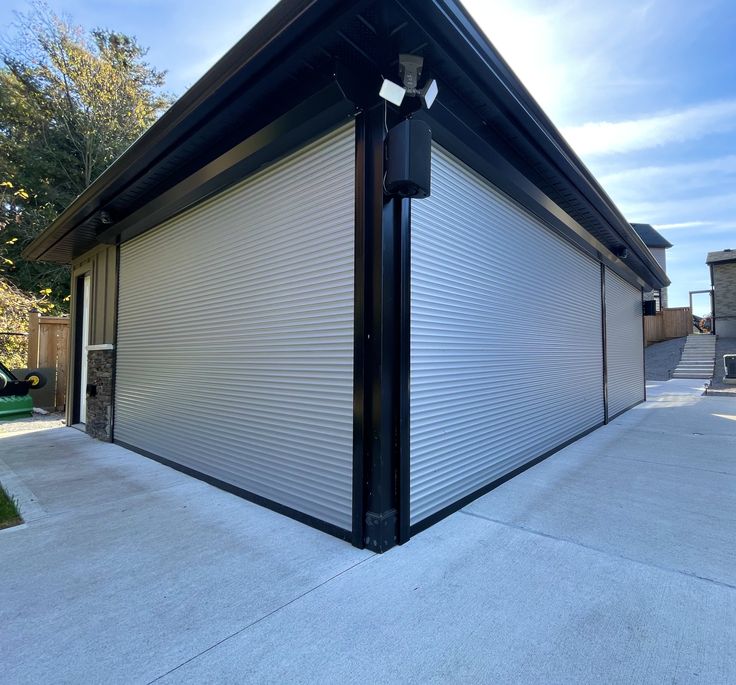
PA-77 belongs to the group of large foam-filled profiles. It is used mainly for roller garage doors, wide technical openings, canopies and other large structures.
For a roller garage door, it is important to calculate not only the profile but also the shaft diameter, motor power, box size, guide rails and emergency opening method.
For window shutters, the profile is selected according to the opening dimensions, the use of the premises and the required level of protection.
Extruded slats have thicker aluminium walls and are significantly heavier than foam-filled profiles of a similar height. This allows the curtain to resist bending, forced deformation and other mechanical impacts more effectively.
These profiles are used for anti-vandal security shutters installed on shops, warehouses, offices, cashier areas, separate entrances and other locations with increased strength requirements.
Because an extruded curtain is heavier, the shaft, fasteners, spring mechanism and electric motor power must be calculated correctly. A strong mounting base, reliable guide rails and professional installation are especially important for heavy systems.
Foam-filled roller shutters create a physical barrier, cover glazing, restrict access to windows or doors and can significantly complicate unauthorised entry. However, their rigidity should not be considered equal to that of a thick-walled extruded profile.
The protection level depends not only on the slats. Guide rails, the bottom bar, locking system, locking bolts, fastening method and wall material are also important.
For more information about the capabilities and limitations of roller shutter systems under impact loads, read our article on whether security roller shutters can withstand an explosion.
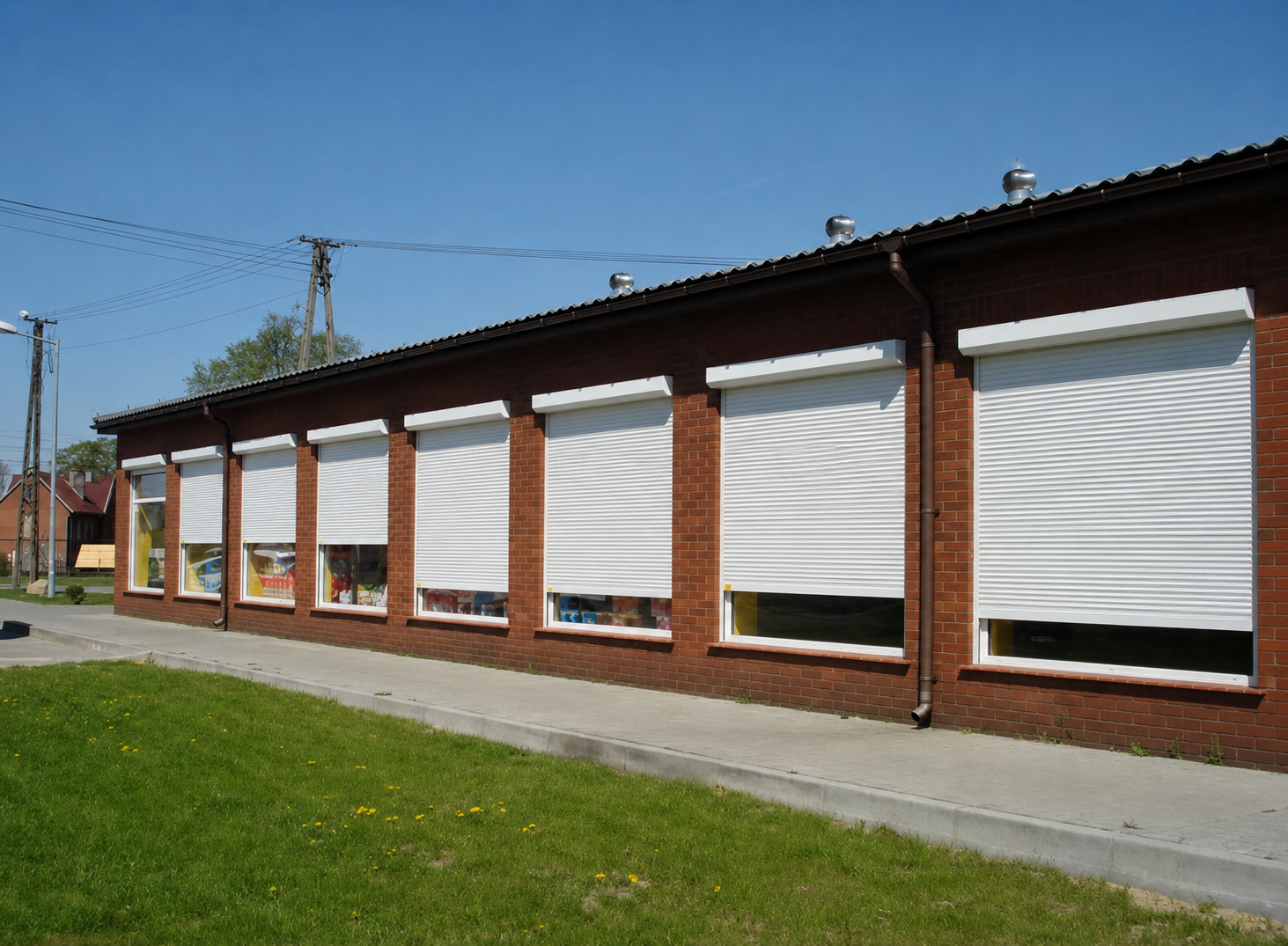
Wide openings require a separate engineering calculation of the profile, shaft, guide rails, protective box and electric motor.
Even a correctly selected profile cannot guarantee reliable operation without the correct components and professional installation. The following factors must be considered during design:
You can review available designs, control options and configurations in the ZAMER security roller shutter catalogue.
Lightweight, small roller shutters can be equipped with a manual tape box, a spring-assisted mechanism or a spring-and-lock system. Electric operation is recommended for large, tall or heavy shutters.
An extruded curtain may be several times heavier than a foam-filled curtain. Therefore, the control system must be selected only after calculating the actual system weight. An underpowered motor or incorrectly selected spring can overload the mechanism.
The same opening may require a different profile depending on the installation location, mounting method and operating conditions. For example, an indoor shutter and an external facade shutter may have the same dimensions but different requirements for rigidity, guide rails and fastening.
A professional site measurement makes it possible to determine the exact product dimensions, check the opening geometry, assess the mounting base and select an optimal configuration without unnecessary cost increases.
Send us the approximate width and height of the opening. ZAMER specialists will select the profile type, control method, guide rails and system configuration according to the dimensions and intended use.
Order Security Roller Shutters
Interested in our products and need a consultation?
Leave a request and our manager will consult you
Choose your preferred contact method